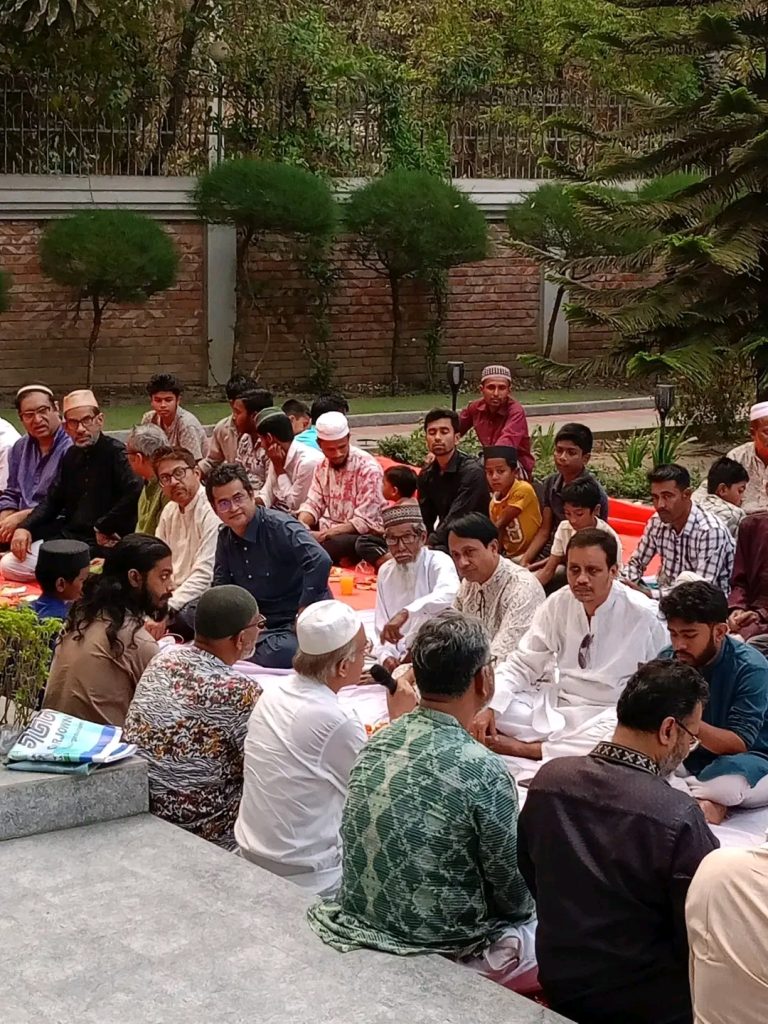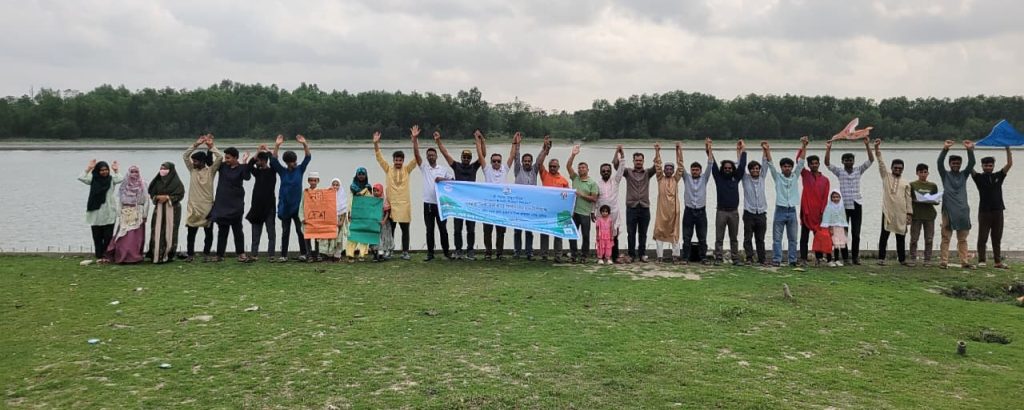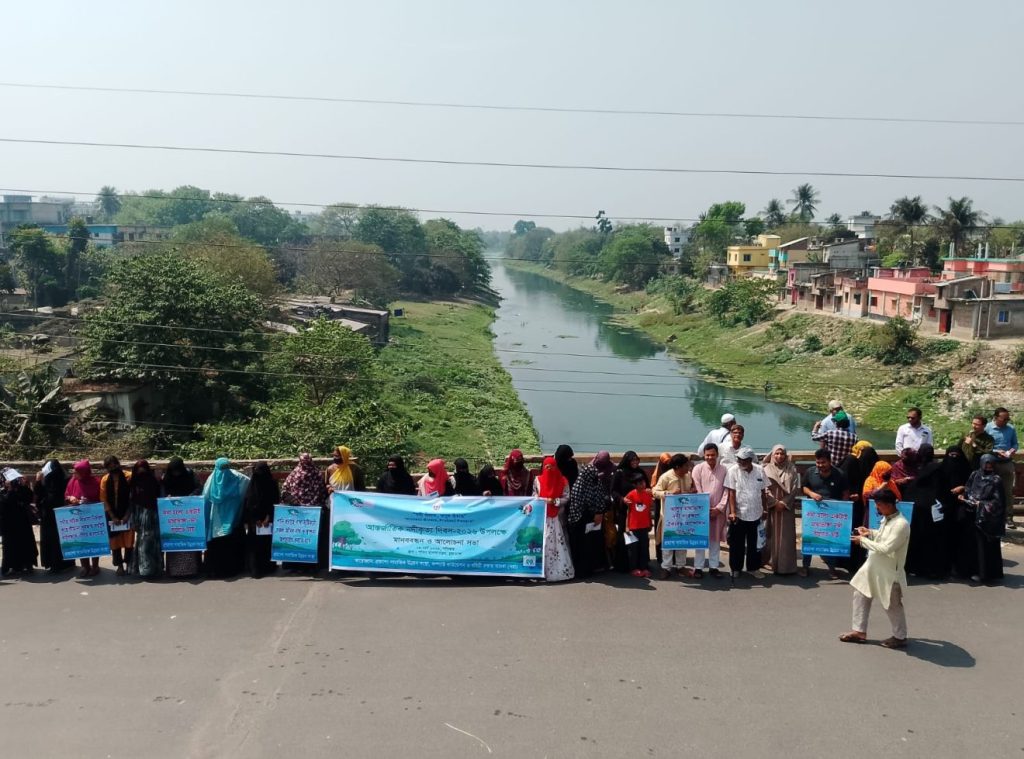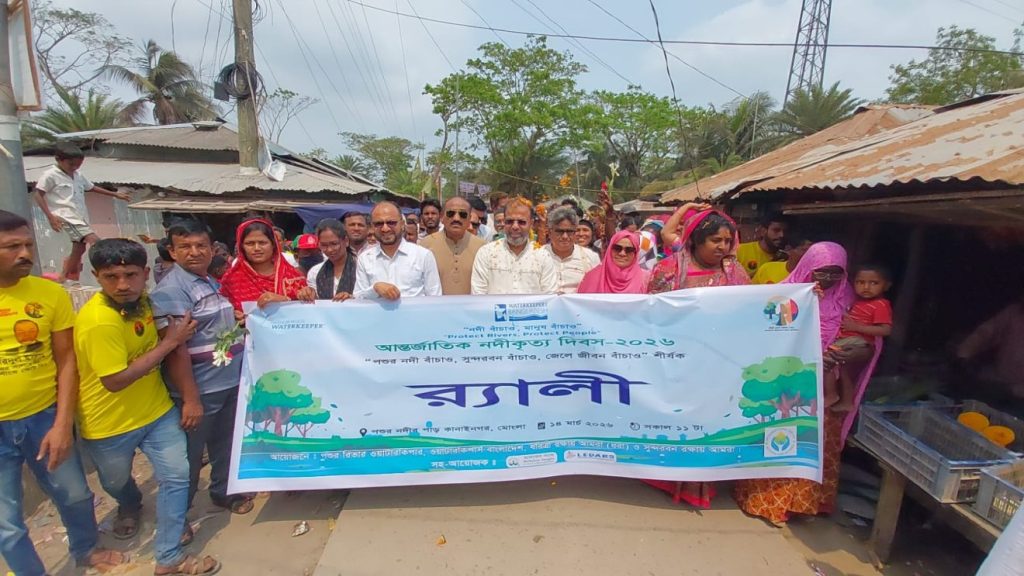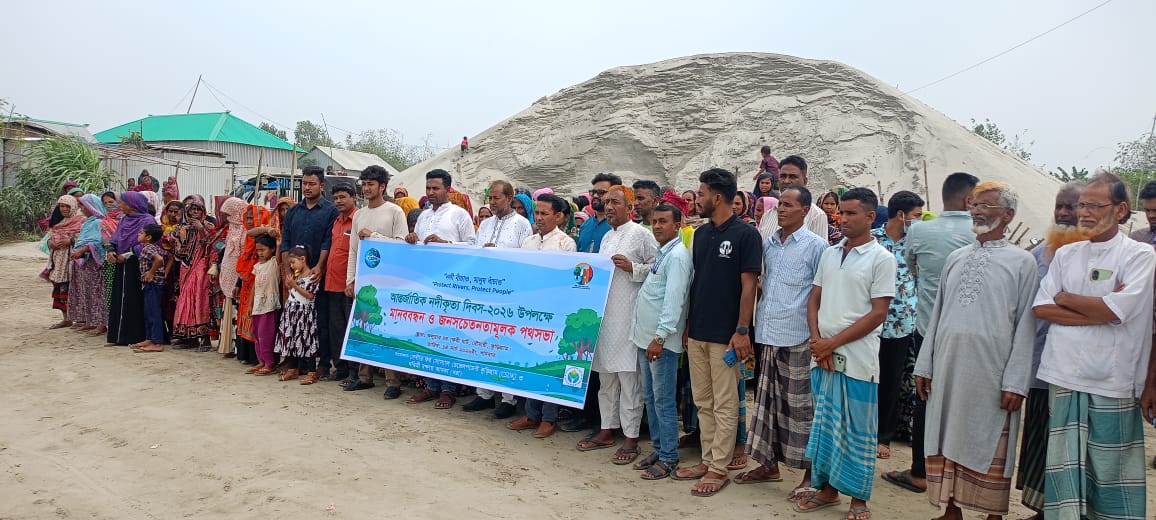
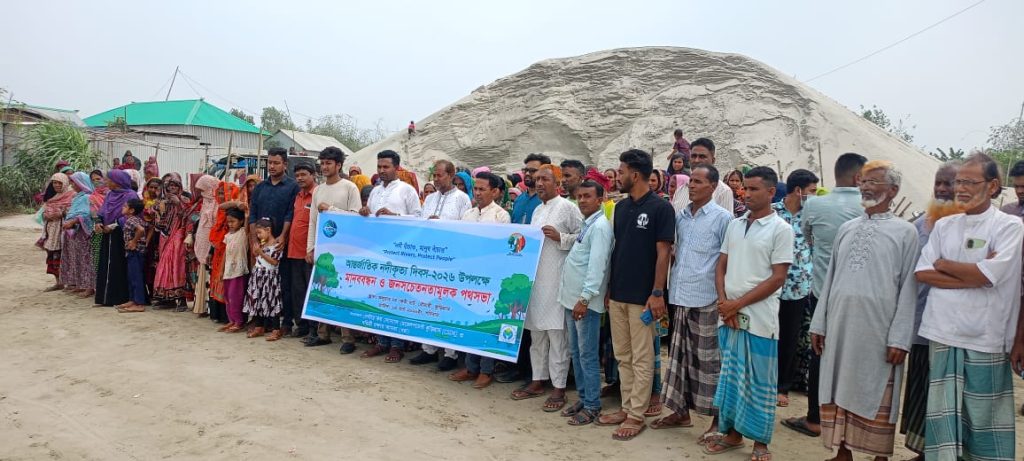
On this International Day of Action for Rivers 2026, let’s remember that our rivers are our lifeblood. Protecting them is not just an option; it’s a necessity for our survival. Let us unite to protect our rivers and ensure a cleaner, greener planet for future generations. Waterkeepers Bangladesh and Dhoritry Rokhhay Amra (DHORA) along with its partners in different areas arranged activities. Here is a glimpse of activities.
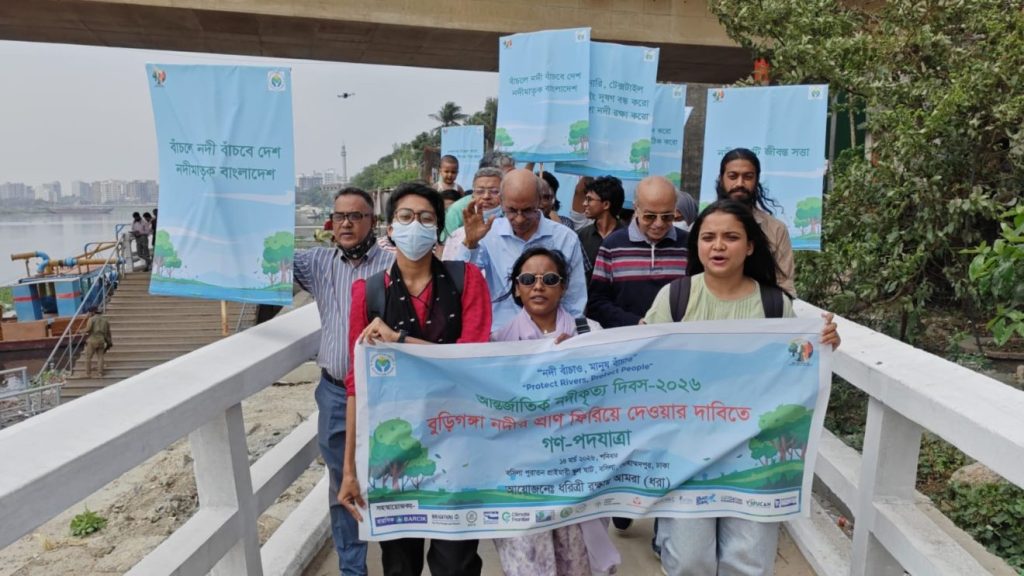
Dhaka: A mass march was held in Dhaka demanding the revival of the Buriganga River. The event was organized by Dhoritry Rokhhay Amra (DHORA), Waterkeeper Bangladesh along with co‑organization from 19 environmental and river‑based groups. Led by Masfikul Hasan Tony of the Bangladesh Mountaineering and Trekking Club, the march began at Bosila Old Government Primary School on the riverbank and continued up to Haikkar Canal. The inaugural ceremony featured Dr. Mujibur Rahman Howlader, former Chairman of the National River Conservation Commission and DHORA advisory council member, as chief guest. The program was presided over by Sharif Jamil, Member Secretary of DHORA. Speakers highlighted that illegal encroachment, pollution, and obstruction of the river’s natural flow have pushed the Buriganga into a severe crisis. They urged the newly formed government to take urgent steps to free the river from encroachment and pollution, and to restore its vitality and navigability. Organized under the call “Save Rivers, Save People”, the march drew participation from environmental organizations, river activists, and conscious citizens, reflecting a strong collective demand to protect one of Dhaka’s most vital rivers.
Sylhet: The Surma River in Sylhet is facing severe pollution, with its bed now clogged by plastic, polythene, and waste carried through canals and streams during rainfall. Waste‑mixed sandbars have emerged, destroying the river’s natural ecosystem. Once rich in aquatic life, the Surma is gradually losing its vitality. Marking the day an art camp titled “Pollution of Surma” was organized to raise public awareness. The event took place beside Ali Amjad’s Clock Tower from 12:00 pm to 3:00 pm, hosted by Surma River Waterkeeper. A total of 12 artists participated, portraying the alarming state of the river through their paintings. The camp served as a creative call to action, urging collective responsibility to protect the Surma and restore its ecological balance.
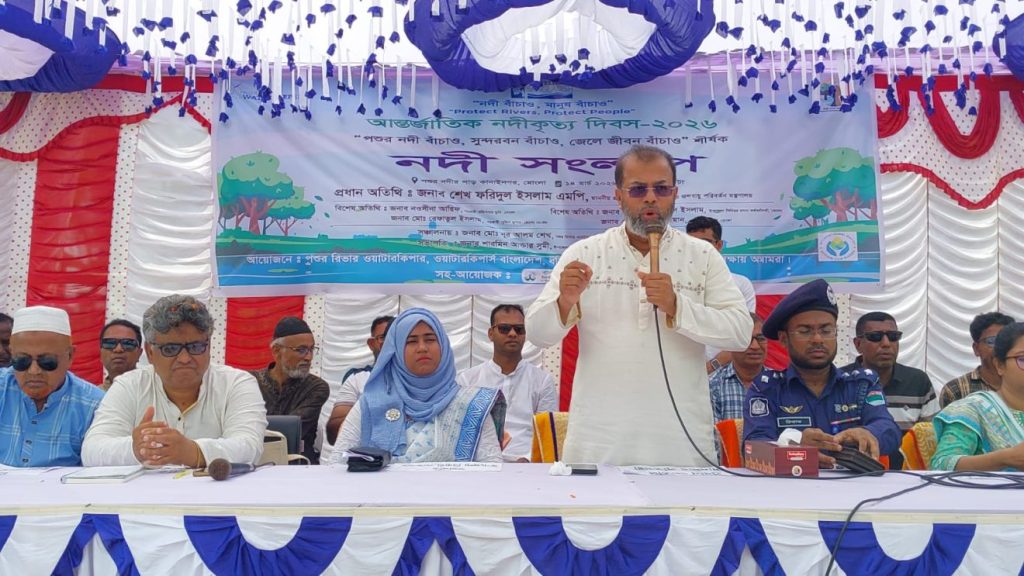
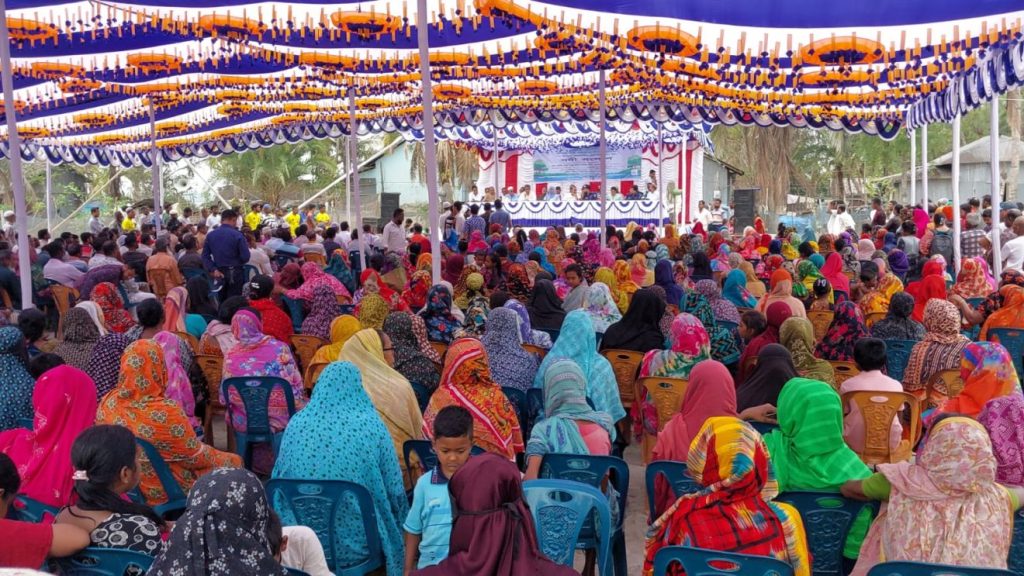
Mongla: A river dialogue was held on the banks of the Pashur River at Kanainagar, Mongla. Organized by Dhoritry Rokhhay Amra (DHORA), Pashur River Waterkeeper, Sundarban Rokhhay Amra, and Waterkeepers Bangladesh, with support from Badabon Sangha and Leaders, the program drew wide participation. Chief guest Dr. Sheikh Faridul Islam, MP and State Minister for Environment, Forest and Climate Change, GOB emphasized restoring river flows to protect the Sundarbans. He called for removal of illegal embankments, dredging of rivers and canals, and strict action against coal, plastic, and industrial pollution, while pledging Climate Trust Fund resources for vulnerable areas. Local administration, fisherfolk, women representatives, and citizens joined, highlighting threats to livelihoods. Speakers demanded urgent measures, including fisher cards and family cards for women fisherfolk. A rally preceded the dialogue.
Pabna: Citizens of Chatmohar upazila in Pabna organized a human chain on the Nengri–Ghasikola bridge over the Chiknai River. The program continued with an awareness rally that concluded at Nengri Bazaar, followed by a street meeting. Jointly organized by Dhoritry Rokhhay Amra (DHORA), Chalanbeel Rokhhay Amar, and Chiknai Nodi Rokhhay Amra, the event highlighted urgent demands to safeguard the river. Speakers called for the removal of the Demra sluice gate to restore the Chiknai’s natural flow and pressed for immediate administrative action to stop pollution caused by farm waste. The program underscored the Chiknai River’s importance for local livelihoods and ecosystems, urging collective responsibility to protect and restore this vital waterway.
Chattogram: Residents of Lohagara upazila in Chattogram organized a human chain and protest demanding protection of the Tonkabati River. Speakers warned that uncontrolled encroachment and toxic waste from hospitals and local markets have severely polluted the river. Once a mighty waterway, the Tonkabati is now losing its natural flow and vitality. They cautioned that unless urgent steps are taken to restore the river, the region’s environment, biodiversity, and livelihoods will face grave disaster. Participants expressed frustration, noting that despite entrusting political leaders with responsibility, rivers and canals continue to be encroached upon and polluted daily. They criticized the lack of effective initiatives from authorities, saying rivers are heading toward destruction. Local residents strongly demanded immediate removal of illegal encroachments, an end to dumping hospital and market waste, and urgent measures to restore the Tonkabati’s natural flow. The program concluded with the reminder: “A river is a living entity. If rivers are allowed to live, only then will people, nature, and biodiversity survive.”
Barguna: Barguna hosted a cycle rally and street meeting demanding restoration and dredging of the Khakdon River. The rally began at 10 a.m. from Barguna River Port and proceeded to the Payra end of the river. Speakers included Animesh Biswas, Additional Deputy Commissioner; Md. Hannan Pradhan, Executive Engineer of the Water Development Board; leaders of the Citizens’ Rights Protection Committee; and members of the Barguna Cycling Community. Along the route, awareness meetings were held in Sonakhali, Keorabunia, Douatala, and Itbaria, urging residents to join the movement. Leaflets were distributed to raise public awareness about the river’s importance. The program concluded with a collective call: “Save rivers, save lives—let us restore the Khakdon River and protect our rivers.”
Narsingdi: Citizens of Narsingdi formed a human chain and held a discussion meeting demanding protection of the Haridhoya River and an end to illegal sand extraction from the Meghna. Speakers warned that the historic Haridhoya River is under severe threat from pollution, encroachment, and mismanagement. They emphasized that rivers are vital for local biodiversity, agriculture, and livelihoods, and called for urgent measures to safeguard them. Key demands included boundary demarcation, stopping encroachment and pollution, and strict monitoring. Participants also urged immediate action against illegal sand mining in the Meghna River. Local activists, civil society members, students, and citizens joined the program, pledging to build a social movement to protect rivers. The event concluded with the reminder: “If rivers survive, the environment will survive, and people will survive.”
Sherpur: A human chain was organized in Sherpur to demand protection of the Mrigi River under the slogan “Save Rivers, Save People.” Speakers highlighted that the Mrigi River—considered the lifeline of Sherpur—has long been severely polluted due to illegal encroachment and waste from factories and households. They urged the administration to take immediate steps to free the river from encroachment, stop pollution, and restore its natural flow. The program was jointly organized by the Sherpur district branch of Dhoritry Rokhhay Amra (DHORA) and Voice of Poor People, with support from the Sherpur Youth Network. Local environmental activists, students, and civil society representatives participated, pledging to protect the Mrigi River as part of a broader movement to safeguard rivers and communities.
Kalapara: In Kalapara, Patuakhali the day was observed with a human chain and symbolic paper boat protest on the banks of the Andharmanik River.The program was jointly organized by Dhoritry Rokhhay Amra (DHORA), We Are Kalaparabasi, and Environment Protection Movement Kalapara. Speakers included Mezbahauddin Mannu, Dhoritry Rokhhay Amra (DHORA)’s Kalapara Coordinator; Amal Mukharji, General Secretary of Kalapara Press Club; Russell Molla, General Secretary of Kalapara Reporters Club; environmental activist Kamal Hasan Rony; and Nazrul Islam. They demanded effective measures to demarcate river boundaries, stop encroachment and pollution, and restore the natural flow of the Andharmanik and other rivers in the area. The program concluded with the symbolic floating of paper boats, reinforcing the call for river protection. Local activists, citizens, and students actively participated.
Gazipur: The Nagda River, stretching 21 kilometers through Gazipur and Narsingdi, is facing an existential crisis due to severe pollution and encroachment. Once abundant with clear water and fish, it has now become a dumping ground for industrial waste, water hyacinth, and mosquitoes. To determine actions for protecting the river and engage local communities, a consultation meeting was held on 13 March 2026 at Samarsingh village in Pubail, Gazipur. The program was jointly organized by Dhoritry Rokhhay Amra (DHORA) and Gorjon. Participants included Sharif Jamil, Central Member Secretary of Dhoritry Rokhhay Amra (DHORA); Sanjida Rahman, Coordinator of Chunati Rokhhay Amra; Masfikul Hasan Tony, member of Dhoritry Rokhhay Amra (DHORA) and Bangladesh Mountaineering and Trekking Club; and Farzana Urmi of Gorjon Social Welfare Organization, along with nearly 300 villagers. All pledged to build a broader civic movement to save the Nagda River. Sharif Jamil emphasized: “It is unacceptable that such an important river of Dhaka will disappear before our eyes. Protecting the Nagda River can serve as a crucial test case for fulfilling our commitment to river conservation.” Three key demands were raised: removal of obstructive bridges, immediate action against encroachment and pollution, and urgent dredging with regular monitoring. The program concluded with the reminder: “If rivers survive, nature will survive, and people will survive.”
Pekua: To observe the day, programs were jointly organized by Dhoritry Rokhhay Amra (DHORA), Salt-Fish-Agriculture Welfare Association, Coastal Mukto Rover Scout Group, and Kutubdia Island Protection Movement, featuring rallies, human chains, and discussion meetings. In Pekua, a colorful rally started from the Upazila Parishad premises and paraded through key roads. Later, at a discussion meeting in the Upazila conference hall, speakers stressed the importance of protecting rivers and natural water bodies. They demanded freeing Pekua’s historic Bhola River and the vital Kahalakhali Canal, along with all rivers and canals, from encroachment and pollution.
Kutubdia: Meanwhile in Kutubdia, a human chain was organized at the banks of the island’s oldest and largest Pilotkata Canalprotesting illegal occupation and filling of Pilotkata Canal. Speakers highlighted its role as a lifeline for marginal farmers and ordinary residents. They warned that illegal occupation and filling have destroyed its navigability, severely affected biodiversity and livelihoods, and called for urgent dredging to restore its flow. The programs concluded with the reminder: “Protecting rivers, canals, and water bodies means protecting not only the environment but also people’s lives, livelihoods, and future. If rivers survive, nature will survive, and people will survive.”
Habiganj: A citizen sit‑in was held at Khowaimukh Boat Terminal in Habiganj to demand protection of the Khowai and Sutang rivers, along with all rivers in the district, from encroachment and pollution. The program was jointly organized by Khowai River Waterkeeper and Dhoritry Rokhhay Amra (DHORA), Habiganj branch. Speakers noted that nearly all rivers across Habiganj’s nine upazilas are under severe threat, despite being vital for livelihoods, agriculture, and the environment. They called for urgent steps to free rivers from encroachment, stop industrial pollution, and restore their natural flow and navigability. The event was attended by Professor Dr. Mohammad Zahirul Haque, Vice Chancellor of Metropolitan University and Central Organizer of Dhoritry Rokhhay Amra (DHORA), as chief guest. It was presided over by Professor Md. Ikramul Wadud, President of Dhoritry Rokhhay Amra (DHORA)’s Habiganj Advisory Council, and conducted by Tofazzal Sohel, Khowai River Waterkeeper. The sit‑in concluded with a strong collective call: “Save rivers, save people – restore the lifelines of Habiganj.”
Kurigram: A human chain and awareness street meeting was organized on 13 March 2026, in Roumari, Kurigram by DHORA and Center for Social Development Kurigram (CSDK). Held at the Phuluarchar Ferry Ghat on the banks of the Brahmaputra River, the program was attended by local residents, men and women, youth, and people from diverse professions. Carrying banners under the slogan “Save Rivers, Save People”, participants demanded urgent action to stop river encroachment and pollution, and to restore the river’s natural flow. Speakers emphasized that rivers are deeply connected to life, agriculture, and biodiversity. Without protecting rivers, environmental balance will collapse, threatening livelihoods and ecosystems. They called for collective responsibility from local communities, administration, and all stakeholders. The event concluded with a short street meeting highlighting the importance of river conservation and environmental protection.
Chuadanga, Patharghata, Moulavibazar, Bogura: Human chains, rallies, street meetings, and discussion programs were organized also in other areas of the country to raise awareness and demand river protection. In Chuadanga a human chain was formed on the Mathabhanga River, calling on the administration and government to take effective measures against encroachment and pollution. In Patharghata,local residents staged a hunger strike demanding protection of Bishkhali River from river erosion and encroachment. They called for sustainable embankments, social afforestation, and rehabilitation. In moulavibazar, a human chain was organized demanding excavation of the Manu, Gopla and Shakha Barak rivers and freeing them from encroachment. Speakers urged everyone to recognize rivers as living resources and join awareness movements. In Bogura, citizens gathered in a human chain to demand river conservation, freedom from encroachment, and prevention of pollution. Speakers emphasized: “Rivers are inseparable from our lives, culture, and livelihoods. If rivers survive, agriculture, environment, and people will survive.” The programs concluded with a collective call: “Let us unite to free Bangladesh’s rivers from encroachment and pollution.”